A Chat with Welsh Practice Riverside Surgery on their Early Adoption of BetterLetter
3 Jun
2026

In Welsh primary care, clinical coding has often been a manual and resource-intensive task.
For Riverside Surgery, one of the first practices in Wales to adopt BetterLetter, the challenge was not only improving the efficiency of their coding processes, but also creating greater consistency, visibility, and confidence within their workflow.
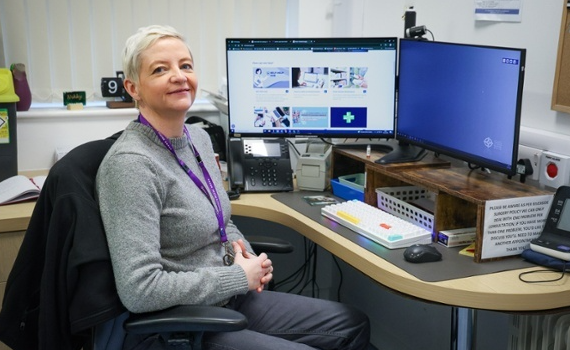
We sat down with Nikky, Practice Manager at Riverside Surgery, to speak about the practice’s early experience with BetterLetter and the improvements they’ve already seen since implementing the platform.
Q: What did the clinical coding workflow look like at Riverside Surgery before BetterLetter?
Nikky: It was very manual. Letters were scanned in via external systems and then were manually coded into EMIS. It was quite a time-consuming process. What’s changed now is that everything is much more streamlined. The whole process for us has really shifted by switching to BetterLetter, and it’s been a very positive implementation for the surgery.
Q: What were the main challenges or frustrations that made you explore other options for your clinical coding processes?
Nikky: The biggest issue at our practice was coding consistency.
Before BetterLetter, we only had two members of staff coding alongside their other roles, whereas previously we had a dedicated coder, but it was always difficult for us to quantify what was actually being done day to day.
And if we can’t quantify what’s being done, then how do we improve our system?
This created problems around productivity and backlog management. We were always behind, but we couldn’t clearly measure why or where the bottlenecks were. We tried tracking things using spreadsheets, but even that became time-consuming. It wasn’t a scalable solution.
Ideally, I wanted multiple members of staff to be able to support coding at a basic level, so we weren’t reliant on one or two individuals. I didn’t want coding to be a standalone role carried by a single person within the practice.
Q: What made BetterLetter stand out compared to other options?
Nikky: We actually needed change.
There was no consistency or quality control in our previous system. Different people were coding in different ways and there was no real standardisation.
I looked at other options, including a Welsh-developed tool and another company from England, but after doing research and speaking with the team, BetterLetter felt like the best fit.
One of the things that really stood out was the flexibility of the model. It gave us confidence we were investing in something that would genuinely deliver value to the practice - and it absolutely has.
I’m also very invested in digital transformation in primary care. I think we need to move with the times!

Q: What was onboarding like in the first week or two?
Nikky: The onboarding was very easy and straightforward.
The training with Erica from BetterLetter was excellent, and our coder Natalie particularly valued the live support while we were getting set up.
The only complexity was integrating with DHCW (Digital Health and Care Wales) and EMIS, but that wasn’t an issue with BetterLetter itself - it was simply part of the Welsh system setup. Now that the pathway has been established with our practice, it will be much simpler for other Welsh practices adopting BetterLetter.
But generally, things ran very smoothly.
Q: What feedback or impact have you seen at your practice so far since implementing BetterLetter?
Nikky: Productivity has increased significantly - from 100 letters a day to about 250 for one coder. That’s a huge improvement for us. It also has helped reduce backlog pressure, and if that level of productivity is sustained, backlogs will continue to be avoided.
Q: Do you think BetterLetter is addressing challenges common to practices in Wales? Would you recommend it to other Welsh practices?
Nikky: A hundred percent.
Coding has always been an “elephant in the room” - difficult to measure and inconsistent across staff. The standardisation has been really valuable.
I would absolutely advocate for other Welsh practices to use BetterLetter. I’ve even invited another practice to come in person and see how we use the platform because I think once they see it in action, they’ll want to implement it themselves.
The onboarding process was straightforward, the support from the BetterLetter team has been excellent, and the standardisation it has brought has been hugely valuable for the practice.
So yes, I’d absolutely recommend BetterLetter.
–
Learn more about how BetterLetter is helping Welsh practices improve their clinical coding processes by emailing hello@betterletter.ai.